

There’s something so satisfying about growing your own herbs, and our little basil plant has been thriving in the recent warm spell. With the sunshine nudging the leaves into overdrive, we knew it was time to harvest and put it to good use. What better way than an easy homemade pesto? This recipe is simple, fresh, and packed with the kind of flavour that makes you wonder why you’d ever buy a jar from the shop.
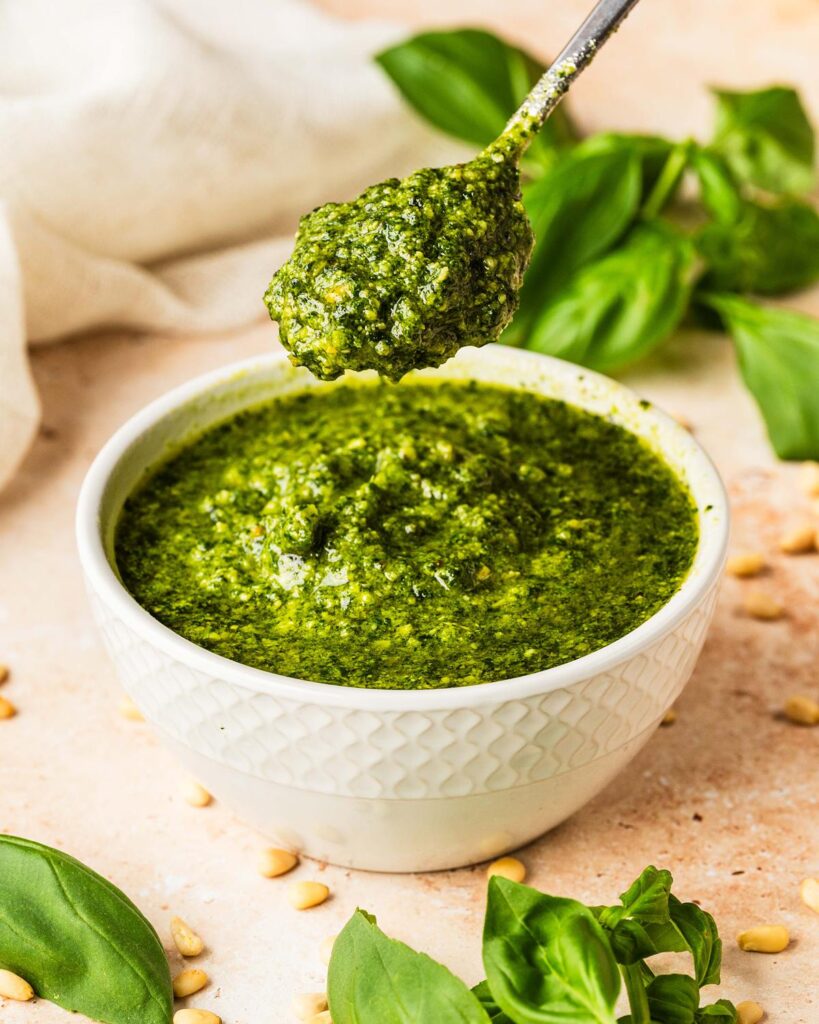
We’ve had this little basil plant on our windowsill for about five years now. It really is the gift that keeps giving! So whenever it gets big enough, I give it a little “haircut” and make the leaves into a fresh homemade pesto sauce. Our kids love the flavour and it always goes down a treat.
What Is Pesto Sauce?
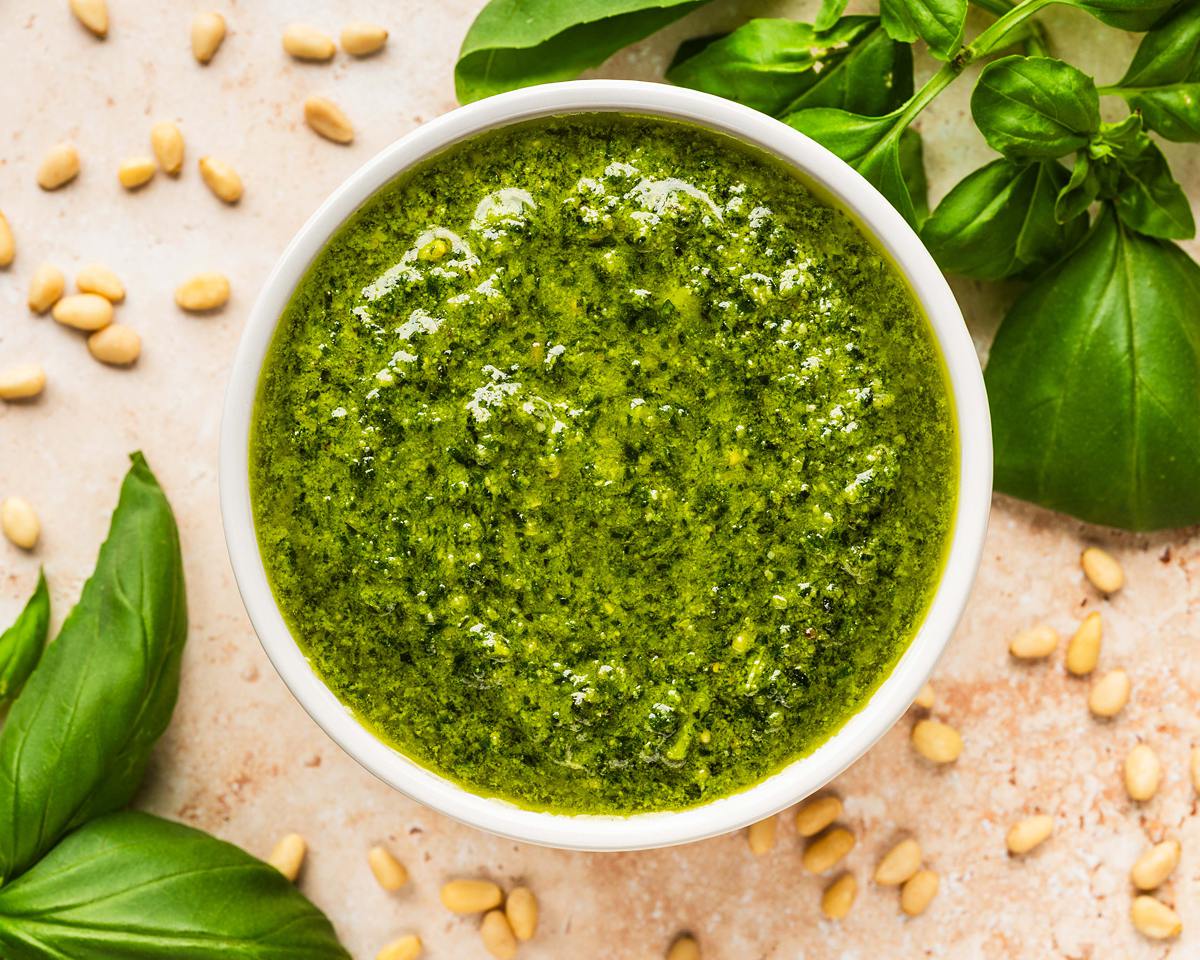
Pesto is a classic Italian sauce traditionally made from fresh basil, garlic, pine nuts, Parmesan cheese (specifically Parmigiano Reggiano), and extra virgin olive oil. It’s blended into a thick, green paste and typically served with pasta,
Now you can make pesto with a few different varieties of ingredients (I’m looking at you spinach and cashews), but I always believe sampling the OG before you decide to go all mad scientist on your tastebuds. Now technically, this is not a traditional way of making pesto. That involves carefully mashing the ingredients together with a pestle and mortar.
Fun fact: this is the method that gives “pesto” its name, from the Italian pestare, meaning “to pound” or “crush”.
Is homemade pesto better?
Yes. Next question. In all seriousness, I always prefer to make pesto from scratch. That way you can control the flavour or even add extra ingredients if you wish. Freshly made pesto retains more of its natural oils and nutrients, especially from basil and olive oil, which degrade over time in shelf-stable products.

What are the ingredients in homemade pesto?
- Basil: a soft, aromatic herb most commonly used in Mediterranean and especially Italian cooking. If you’re growing basil at home, pinch off the flower buds early to keep the plant leafy and flavourful for longer.
- Extra Virgin olive oil: the base carrier for all the irresistible flavours in this sauce. Make sure to try before using, as some olive oils can give a slight bitter flavour if old or left in sunlight for too long.
- Parmesan cheese: specifically Parmigiano Reggiano, which has a rich, nutty, and slightly salty taste.
- Pine nuts: bring a delicate, buttery flavour to the sauce. Pedant alert! Pine nits are technically seeds.
- Garlic: prized for its ability to enhance the flavour of dishes.
How to make pesto at home
The method for making this pesto sauce from scratch couldn’t be simpler.

Step 1: The first stage is completely optional, but I would recommend lightly toasting the pine nuts. Toasting brings out the natural oils in pine nuts, intensifying their nutty, buttery flavour.

Step 2: Add the basil, garlic, and (toasted) pine nuts to the bowl of a food processor. Pulse until coarsely chopped.
Step 3: Add the cheese and a pinch of salt. Pulse again to combine. With the machine running, slowly drizzle in the olive oil until the pesto is smooth and creamy.


Step 4: Taste and adjust the seasoning. Add lemon juice if desired as this will reduce oxidisation.
How long will homemade pesto last?
To keep homemade pesto fresh and full of flavour, store it in an airtight container in the fridge for up to 5 days. To help prevent the vibrant green colour from darkening, smooth the surface and pour a thin layer of olive oil on top before sealing the lid. This protects it from air exposure, which can cause oxidation. For longer storage, pesto can be frozen in ice cube trays or small containers—perfect for single portions. Once frozen, transfer the cubes to a freezer bag and use them within 2 to 3 months for the best taste and texture.
What makes pesto bitter?
Blending basil for too long, especially in a high-speed blender or food processor, can cause the leaves to oxidise and release bitter-tasting compounds. It also dulls the bright green colour. To avoid this, pulse gently or use a mortar and pestle for a traditional touch.
I’ve read that some extra virgin olive oils can make pesto taste harsh or bitter. I always taste the oil before using as you don’t want to waste your gorgeous basil and parmesan.
Lastly, older basil leaves, especially if they’ve started to flower or are from a mature plant, can taste more bitter than young, tender leaves. Always use fresh, bright green basil, ideally picked just before making the pesto.
If you’ve made your pesto and it does taste bitter, you can balance the flavour by adding a splash of lemon.

Can you substitute ingredients?
One of the best things about pesto is how adaptable it is. If you’re out of fresh basil or just fancy a twist, there are plenty of alternatives you can use. Rocket (arugula), spinach, parsley, coriander, or even kale can take the place of basil—each bringing its own character, from peppery to earthy. You can also mix herbs and greens for a more complex flavour. Similarly, if pine nuts are too expensive or unavailable, try walnuts, almonds, cashews, or even sunflower or pumpkin seeds. These add richness and body, and some options like sunflower seeds are great for nut-free diets.
When it comes to cheese, Parmigiano Reggiano is classic, but Pecorino Romano adds a sharper, saltier edge, while Grana Padano is a bit milder. For dairy-free versions, nutritional yeast or a good vegan hard cheese can work well. Garlic can also be adjusted—raw garlic is punchy, but roasted garlic or even chives offer a gentler alternative. If olive oil is too strong for your taste, try a lighter olive oil or a milder option like avocado oil. You can even brighten up your pesto with a squeeze of lemon juice, or stir in some ricotta or cream for extra richness.
What to use homemade pesto for?
- Use pesto as a spread in sandwiches, wraps, or paninis instead of mayo or mustard. It’s especially delicious with grilled vegetables, chicken, or mozzarella.
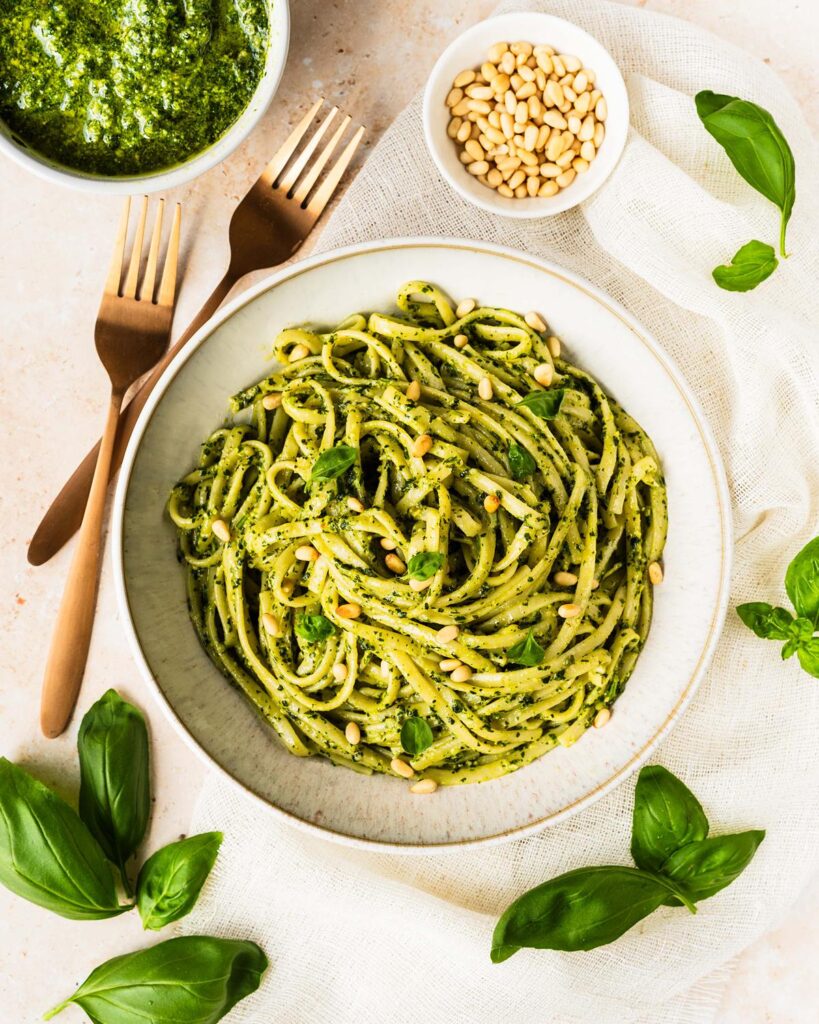
- Toss pesto with freshly cooked pasta, gnocchi, or orzo for a quick and flavourful meal. You can also stir it through couscous, rice, or quinoa for a herby twist.
- Thin pesto with a little extra olive oil or lemon juice to make a quick, fresh dressing for salads, especially ones with tomatoes, beans, or grilled veg.
- Use pesto as a marinade or topping for roasted chicken, grilled fish, or vegetables. It pairs beautifully with courgettes, aubergines, or roasted potatoes.
Troubleshooting
If you have any questions about this homemade pesto recipe, please drop us a comment below, we would love to help. Additionally, if you enjoyed this, we would really appreciate if you would leave us a star rating and review below!
Thanks so much for joining us today friends. Until next time.
Homemade Pesto Sauce
Ingredients
- 80 g basil
- 120 ml extra virgin olive oil
- 60 g Parmigiano Reggiano
- 40 g pine nuts
- 2 cloves garlic
- 1/2 tsp sea salt
Optional extras
- 1 squeeze lemon to help stop oxidisation
Equipment
- 1 food processor
- 1 grater
Instructions
- Lightly toasting the pine nuts.40 g pine nuts
- Add the basil, garlic, and toasted pine nuts to the bowl of a food processor. Pulse until coarsely chopped.80 g basil, 2 cloves garlic
- Add the cheese and a pinch of salt. Pulse again to combine.60 g Parmigiano Reggiano, 1/2 tsp sea salt
- With the machine running, slowly drizzle in the olive oil until the pesto is smooth and creamy.120 ml extra virgin olive oil
Optional extras
- Add lemon juice if desired to reduce oxidisation.1 squeeze lemon
Notes
- Cover the top with a thin layer of olive oil to keep it fresher for longer.
- Freeze in ice cube trays for quick portions.
Did you make this recipe?
Please let me know how it turned out for you! Leave a comment below and tag @ourjazkitchen on Instagram.