
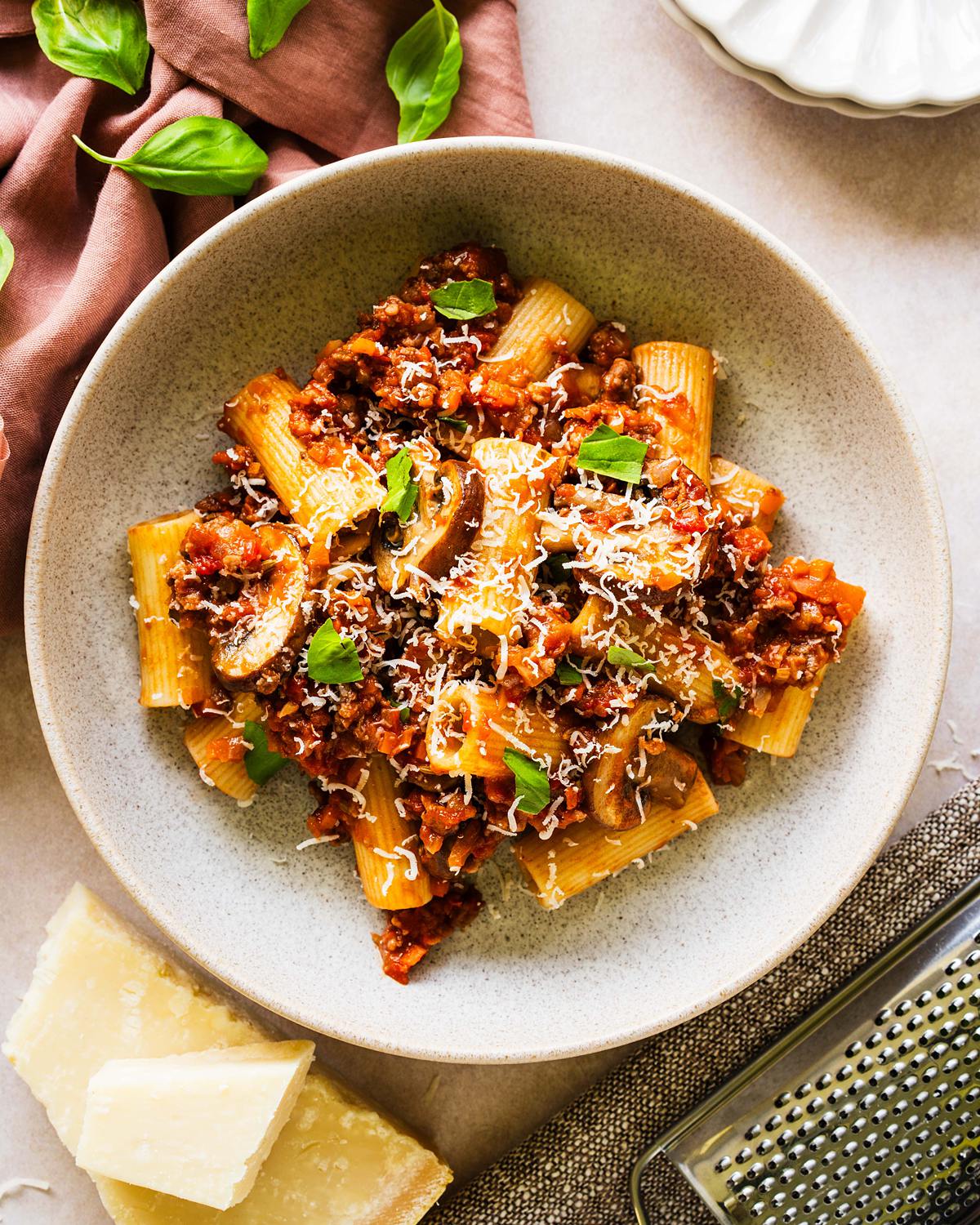
This sausage and mushroom ragu is one of those recipes that instantly takes me back to a little trattoria we stumbled upon during a trip to Italy—tucked away on a quiet side street, where the scent of garlic and slow-cooked tomatoes filled the air. It was simple food, but unforgettable: rich, hearty, and made with love. This version brings a bit of that magic home, using delicious sausages, earthy mushrooms, and a good glug of red wine to create a proper comforting dish. It’s a warm, familiar hug of a meal that always brings that Italian holiday feeling flooding back.

Right, so here’s a little history lesson – what is a ragu? Technically, it should be ragù, but we live in the UK and need some SEO push at the mo. A ragu is a traditional Italian meat sauce, simmered with tomatoes, wine, and aromatic ingredients like onions, garlic, and herbs. The name comes from the French ragoût, meaning stew, but in Italy, it refers specifically to meat-based sauces that are gently cooked to develop a deep, rich flavour. There are two main types, Ragù alla Bolognese and Ragù Napoletano. A ragu can be made all types of meat – beef, pork, lamb, and even horsemeat in parts of Italy. And it’s typically served with pasta, though it’s also lovely with gnocchi, polenta, or even layered into lasagne.
Now that’s the history lesson over. Onto the food!
Ingredients needed to make this sausage ragu recipe
- Sausages: I use a 50/50 mix of good-quality pork and beef sausages. The pork brings richness and a bit of sweetness, and the beef adds depth and more robust flavour.
- Mushrooms: add a deep, earthy richness, giving the sauce an extra layer of umami.
- Onion: part of the soffritto, it’s the aromatic base that gives the sauce its depth and sweetness.
- Carrots: part 2 of 3 of the soffritto. Carrots add a subtle natural sweetness to the ragu, balancing out the acidity of the tomatoes and rounding the overall flavour.
- Celery: the final part of the soffritto trio. Celery is the quiet backbone of a classic ragu, adding an earthy, aromatic layer that works in harmony with the onion and carrot.
- Garlic: brings a gentle warmth and depth to the ragu, weaving through the sauce without overpowering it.
- Tinned tomatoes: Good quality tinned tomatoes are key to a great ragu, bringing richness and balance of sweetness and acidity.
- Red wine: wine deglazes the pan after the meat has browned, lifting all those flavourful caramelised bits into the sauce. It adds depth, warmth, and a touch of acidity to the ragu, enhancing the richness of the sausage and mushrooms.
- Tomato puree: stirred in after the soffritto and allowed to cook out for a minute or two. It helps build a robust base and adds a gentle sweetness that balances the acidity of the tinned tomatoes.
- Fennel seeds: bring a subtle, aromatic lift to the ragu, with their warm, slightly sweet, liquorice-like flavour cutting through the richness of the meat.
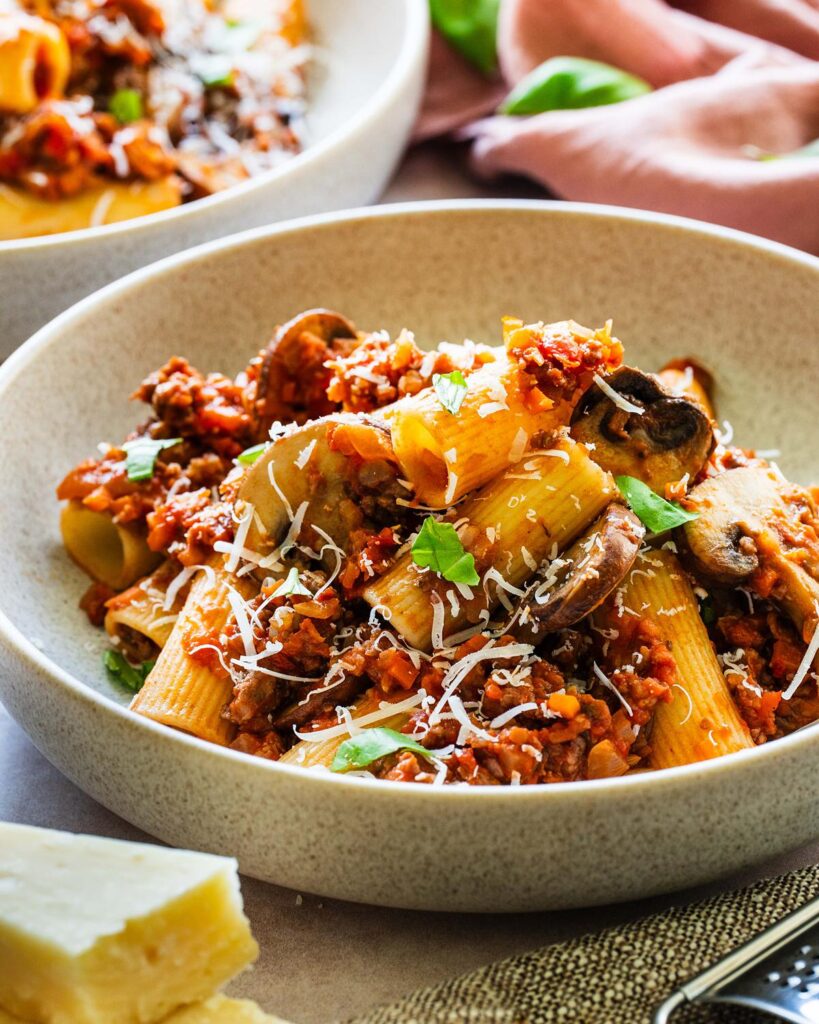
- Pasta: Rigatoni is the perfect pasta for this hearty ragu. Its wide tubes and ridged surface are made to catch every bit of the rich, chunky sauce.
What does Soffritto mean?
Soffritto is an Italian cooking term that refers to a gently cooked mixture of finely chopped onion, carrot, and celery—often called the “holy trinity” of Italian flavour bases.
It’s usually sautéed slowly in olive oil (sometimes with butter) until soft and fragrant, but not browned. The goal is to draw out the natural sweetness of the vegetables and create a rich, aromatic foundation for sauces, stews, soups, and, of course, ragù.
Think of it as the flavour backbone of many classic Italian dishes—humble, subtle, but absolutely essential.
Sausage and Mushroom Pasta
When it comes to pairing pasta with a hearty sausage and mushroom ragu, it’s all about choosing shapes that can stand up to the rich, chunky sauce and hold onto every bit of flavour. Rigatoni is a top choice, with its wide tubes and ridged surface that catch the sauce beautifully. Pappardelle – long, wide ribbons – is another excellent option. Especially if you’re after something a bit more indulgent, as it wraps around the ragu in every bite. Tagliatelle and fettuccine also work well, offering a slightly thinner ribbon-style pasta that still holds the sauce nicely.
If you prefer short pasta, trottole, paccheri, or casarecce are also great options. Yes, I did have to look them up to consider them. They’re are not as common in the UK. They all have twists, curves, or hollows that help trap the meat and mushroom pieces. Ultimately, you want a pasta with enough texture and surface area to cling to the sauce, creating a satisfying, well-balanced mouthful every time.
How to Make this Rich and Hearty Sausage and Mushroom Ragu
Now this recipe is quite simple, but it does involve a fair few step-by-step instructions to get the best flavour out of it.

Step 1: Finely chop 1 onion, 1 carrot, and 1 stick of celery. Peel and crush 2 cloves of garlic. Remove the skins from 400g of sausages (a 50/50 mix of pork and beef is ideal). Clean and slice 250g of chestnut mushrooms.


Step 2: To make the soffritto, heat 1–2 tablespoons of olive oil in a large, deep frying pan or casserole over medium heat. Add the onion, carrot, and celery. Cook gently for 10–12 minutes, stirring often, until soft and translucent but not browned.
Step 3: Stir in the crushed garlic and the fennel seeds. Cook for 1–2 minutes until fragrant.
Step 4: Add the sausage meat, breaking it up with a wooden spoon. Cook for 6–8 minutes, until browned all over and any liquid has evaporated.


Step 5: Pour in about 175ml of red wine. Let it bubble for 2–3 minutes to cook off the alcohol, scraping up any flavourful bits from the bottom of the pan.
Step 6: Add 1 tablespoon of tomato purée and stir through. Let it cook for a minute, then add 1 tin (400g) of good-quality chopped tomatoes. Stir well, lower the heat, and simmer gently for 30–45 minutes, stirring occasionally. Add a splash of water or stock if it thickens too quickly.


Step 7: Separately, while the ragu is cooking, melt 1tbsp of butter in a pan on med/high heat and add the chestnut mushrooms. You will want to brown the mushrooms and not let all the liquid release from them. I prefer to retain the texture of the mushrooms so found it best this way.
Step 8: Add the mushrooms to the ragu 5 minutes before the ragu is cooked and mix through.
Step 9: Taste and season with salt and freshly ground black pepper.


To make the Rigatoni pasta
To make the Rigatoni, bring a large pot of salted water to the boil. Use about 1 teaspoon of salt per litre of water. A big pot gives the pasta room to cook evenly.
Add the rigatoni and stir it in to prevent sticking. Check the packet for the recommended cooking time (usually 10–12 minutes), but start tasting after 9 minutes.
Cook until al dente. The pasta should be tender but still have a slight bite in the centre. Avoid overcooking as it will soften more once mixed with the ragu.
Reserve some pasta water as it’s great for loosening and binding the sauce later.
Drain the pasta, then add it straight into the ragu. Toss together over low heat for a minute or two, adding a splash of pasta water if needed to help the sauce cling.
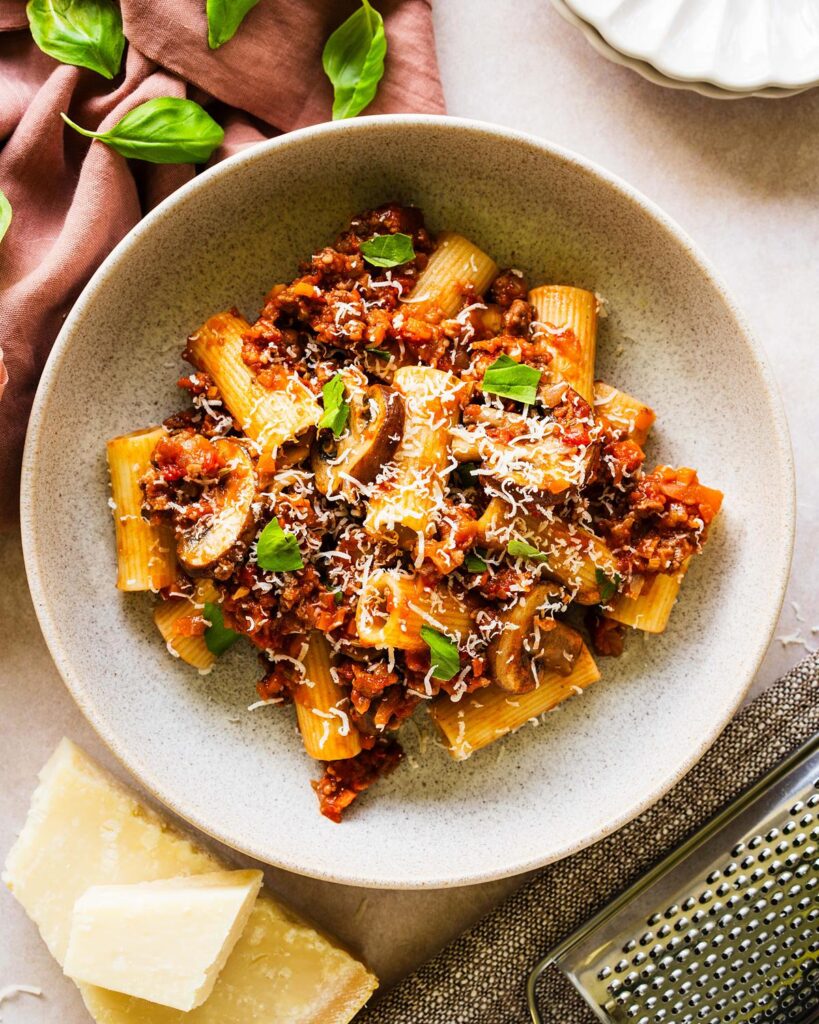
Plate up and decorate with torn basil and grated Parmigiano-Reggiano.
What to serve with Sausage and Mushroom Ragu
Sausage and Mushroom Ragù is hearty and flavourful on its own, but the right sides and accompaniments can really round out the meal. Here are some lovely options to serve alongside:
- Crusty Bread or Garlic Bread: A warm, crusty sourdough or a few slices of garlic bread are perfect for mopping up any leftover sauce on the plate.
- A Simple Green Salad: Something fresh and light. Such as a salad of rocket, watercress, or mixed leaves with a lemony vinaigrette.
- Polenta or Mash: If you’re not in the mood for pasta, creamy polenta or buttery mashed potatoes make a good alternative.
- Parmesan or Pecorino: A generous grating of cheese on top adds saltiness and umami—go with Parmesan for a nutty finish or Pecorino for something sharper.
- Red Wine: A medium-bodied Italian red like Chianti, Barbera, or Montepulciano complements the dish perfectly and ties it together.

Troubleshooting
If you have any questions about this sausage and mushroom ragu recipe, please drop us a comment below. Additionally, if you enjoyed this salad recipe, we would love you to leave us a star rating and review below! Thanks so much!
Thanks for joining us today friends! We hope you love this delectable pasta as much as we do! Until next time!
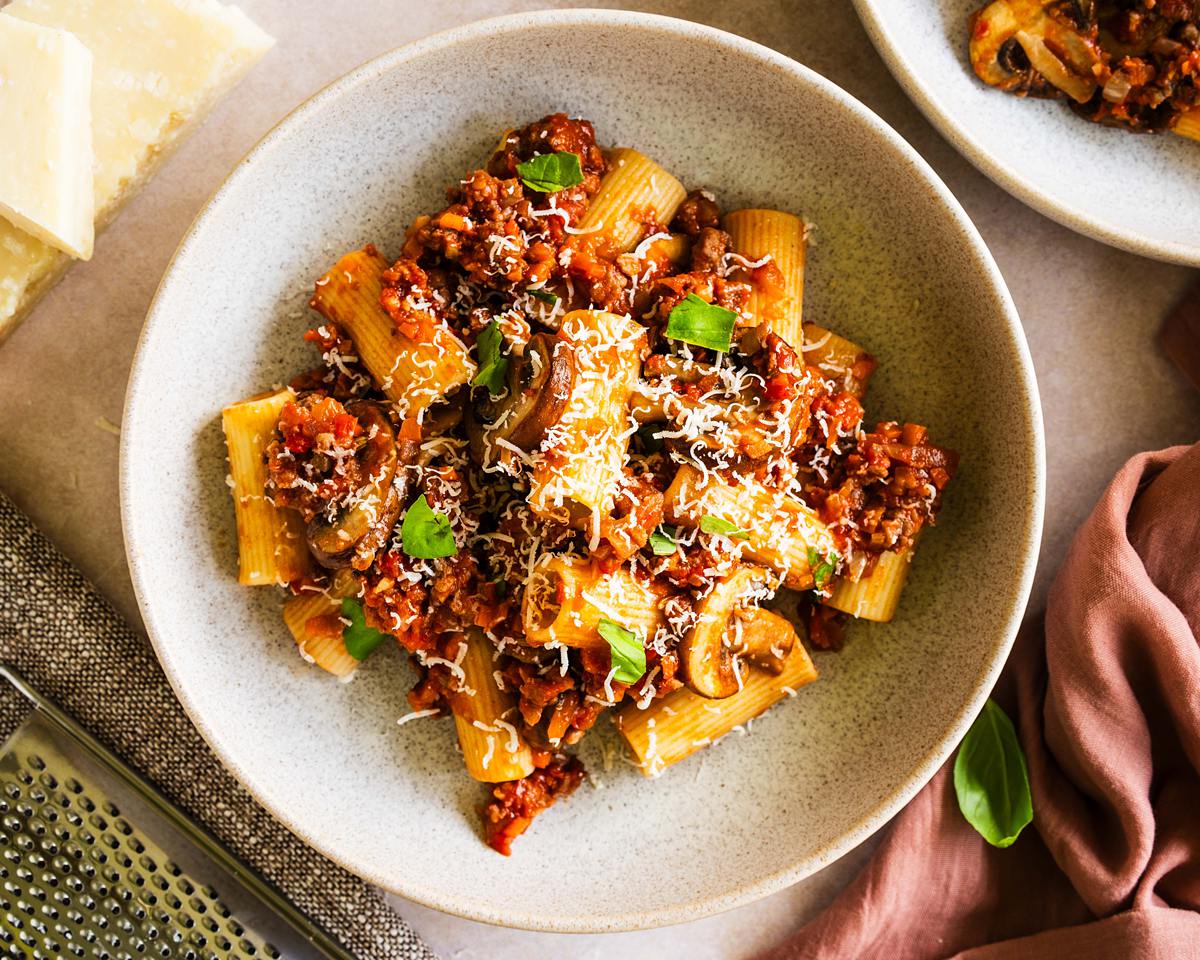
Sausage and Mushroom Ragu
Ingredients
To make the Ragu
- 100 g onion brown or white
- 100 g carrots
- 100 g celery
- 2 cloves garlic
- 400 g sausages 50/50 Beef & Pork
- 400 g tinned tomatoes
- 250 g chestnut mushrooms
- 1 tbsp butter
- 2 tbsp tomato puree
- 175 ml red wine
- 1 tsb fennel seeds
- 1/2 tsb salt
For the pasta
- 300 g Rigatoni pasta
To decorate
- grated Parmigiano-Reggiano
- basil leaves
Equipment
- 1 large heavy-based casserole pot
- 1 frying pan
- 1 saucepan
- 1 knife
- 1 spatula
- 1 grater
Instructions
- Finely chop carrot, celery and onion. Add a tbsp oil to pan and cook on med heat until just before starting to brown.100 g onion, 100 g carrots, 100 g celery
- Add garlic and cook for 30 seconds until fragrant.2 cloves garlic
- Add fennel seeds and stir.1 tsb fennel seeds
- Remove skins from sausages and add to the pan. Turn the temperature up to med/high. Make sure sausages are broken down. Cook for 6–8 minutes, until browned all over and any liquid has evaporated.400 g sausages
- Add glass red wine and cook for 2-3 minutes until wine reduces by about half.175 ml red wine
- Add 1 tablespoon of tomato purée and stir through.2 tbsp tomato puree
- Add good-quality tinned tomatoes and reduce the temperature to low/medium, simmer gently for 30–45 minutes, stirring occasionally. Add a splash of water or stock if it thickens too quickly.400 g tinned tomatoes
- Separately, while the ragu is cooking, melt 1tbsp of butter in a pan on med/high heat and add the chestnut mushrooms. You will want to brown the mushrooms and not let all the liquid release from them.1 tbsp butter, 250 g chestnut mushrooms
- Add the mushrooms to the ragu 5 minutes before the sauce is cooked and mix through.
- Taste and season with salt and freshly ground black pepper.1/2 tsb salt
For the pasta
- Bring a large pot of salted water to the boil. Use about 1 teaspoon of salt per litre of water. A big pot gives the pasta room to cook evenly.300 g Rigatoni pasta
- Add the rigatoni and stir it in to prevent sticking. Check the packet for the recommended cooking time (usually 10–12 minutes), but start tasting after 9 minutes.
- Cook until al dente. The pasta should be tender but still have a slight bite in the centre. Avoid overcooking as it will soften more once mixed with the ragu.
- Add a spoonful of pasta water to the ragu if it's too thick.
- Mix pasta with ragu and serve with a topping of torn basil and grated Parmigiano-Reggiano.grated Parmigiano-Reggiano, basil leaves
Notes
- Top Tip. Look for whole plum tomatoes, ideally San Marzano or a trusted Italian brand, as they tend to have a deeper, more concentrated flavour and fewer seeds.
- If you prefer short pasta, trottole, paccheri, or casarecce are also great options.
Did you make this recipe?
Please let me know how it turned out for you! Leave a comment below and tag @ourjazkitchen on Instagram.